Water Heater Replacement Cost: Tank vs. Tankless in PA
Tank or tankless? We break down real water heater replacement costs in Pennsylvania, including installation, efficiency, and long-term value.
By King of Prussia Plumbing Pros · Published March 10, 2025 · Updated September 1, 2025
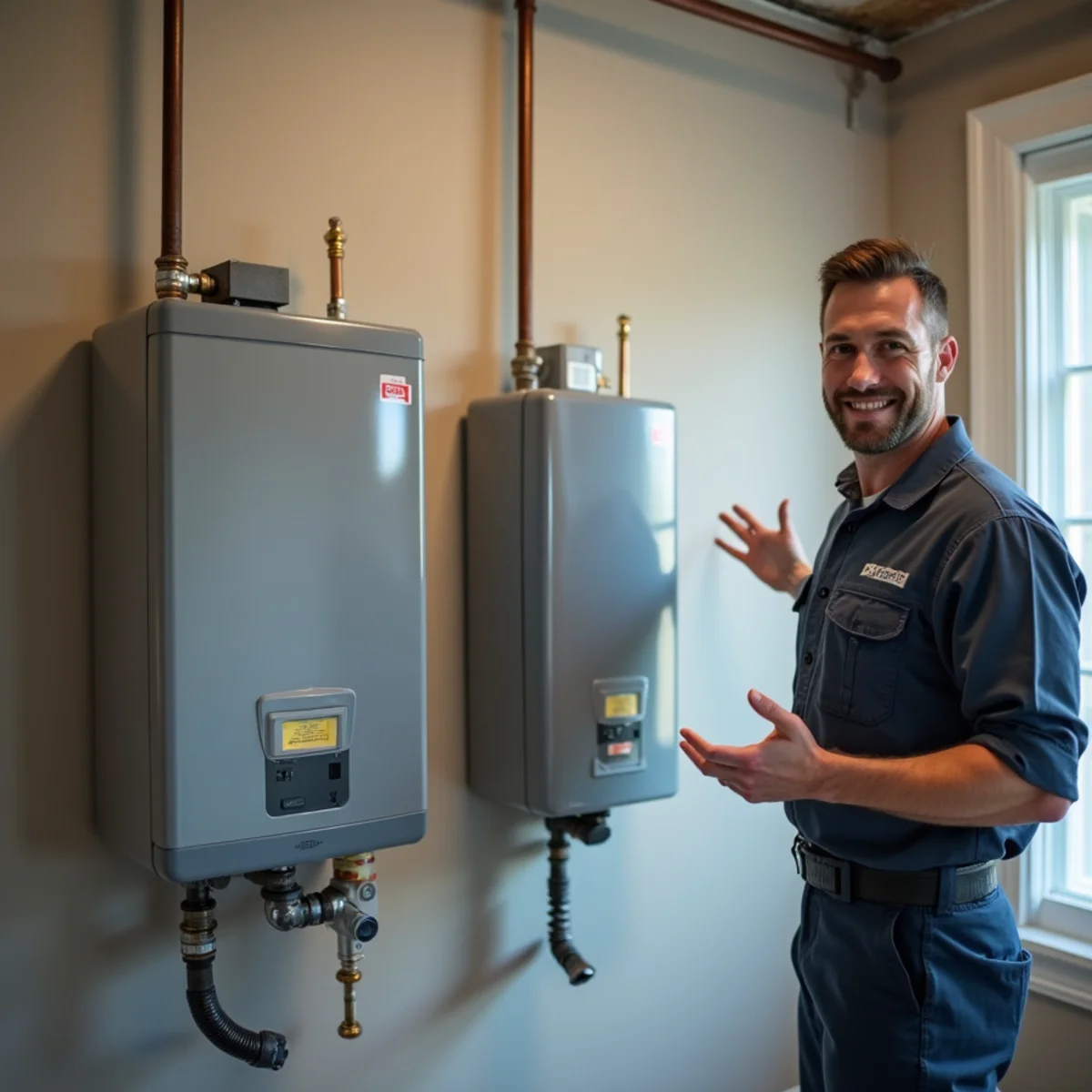
When your water heater finally gives out, you face a choice that will affect your utility bills and comfort for the next decade or more: stick with a traditional tank, or upgrade to tankless? Both are solid options, but they come with very different upfront costs and long-term math. This guide gives Pennsylvania homeowners honest numbers and the local factors that should shape your decision.
Traditional Tank Water Heater Costs
Tank water heaters remain the most common choice for good reason: they are affordable, simple, and quick to install. For a standard 40 to 50 gallon unit in our region, expect:
- Unit and installation combined: roughly $1,500 to $3,500 depending on size, fuel type, and code upgrades.
- Typical lifespan: about 8 to 12 years, shorter if the tank is not maintained.
- Lower upfront cost, higher monthly operating cost than tankless.
Tanks are a strong fit for households with steady, predictable hot-water demand and a tighter upfront budget. The tradeoff is standby heat loss, since the unit keeps a full tank hot around the clock whether you need it or not.
Tankless Water Heater Costs
Tankless, or on-demand, units heat water only as you use it, which saves energy and space. That efficiency comes at a higher upfront price:
- Unit and installation combined: commonly $3,000 to $6,500, sometimes more when gas lines, venting, or electrical must be upgraded.
- Typical lifespan: about 20 years, roughly double a tank.
- Higher upfront cost, lower monthly operating cost, and endless hot water.
Switching from tank to tankless often requires upgrading gas lines, venting, or electrical capacity. Factor these into your budget, because they can add meaningfully to the install cost in older homes.
The Hard Water Factor in Our Area
Here is something the national cost guides overlook: water chemistry. King of Prussia and nearby towns like Blue Bell and Radnor have hard water measuring around 7 grains per gallon. That mineral content matters for both types of heater:
- Tank units accumulate sediment at the bottom, which reduces capacity and shortens tank life unless flushed annually.
- Tankless units are especially sensitive to scale, which can clog the heat exchanger and void warranties if not descaled regularly.
- Pairing either type with a water softener can dramatically extend its life in our area.
If hard water is shortening the life of your appliances, a whole-house solution can help. Learn more about our water softener systems and how they protect your investment.
Comparing Long-Term Value
The right choice depends on how long you plan to stay and how much hot water you use. Consider the full picture:
- 1Upfront budget: tanks win if cash flow is tight right now.
- 2Length of stay: tankless pays back its premium over 10-plus years, so it favors long-term homeowners.
- 3Household size and demand: large families with simultaneous demand may need a larger tankless unit or multiple units.
- 4Space: tankless frees up floor space, valuable in smaller homes.
- 5Energy savings: tankless typically cuts water-heating energy use, though the exact savings vary.
Don't Forget the Cost of Doing Nothing
When comparing quotes, it is easy to focus only on the purchase price and overlook the ongoing operating cost, which adds up to real money over a decade. A traditional tank keeps 40 to 50 gallons of water hot around the clock, losing heat through the tank walls even when no one is home, a phenomenon called standby loss. A tankless unit eliminates that waste by heating water only on demand. Over a 20-year tankless lifespan, those monthly savings can offset a meaningful share of the higher install price, though the exact payback depends on your usage and energy rates. There is also the matter of failure risk: an aging tank that finally ruptures can dump its entire contents onto your floor, and if it sits in a finished basement, the resulting water damage can cost more than the heater itself. Replacing a unit proactively, on your schedule, is almost always cheaper than replacing it in an emergency.
Repair or Replace First?
Before you replace anything, make sure replacement is actually necessary. If your unit is under about eight years old and the tank is sound, a repair in the $150 to $700 range may buy you years. Our team offers honest water heater repair and will tell you plainly when a repair makes sense and when your money is better spent on a new unit. If you are currently without hot water, our guide on emergency water heater help walks you through the immediate steps.
From the Field: The Install Costs the Brochure Never Mentions
The sticker price on the unit is the easy part. What actually moves a quote is code compliance at the moment of install, and older King of Prussia homes rarely meet current code straight out of the box. Swapping a tank for a like-for-like tank often triggers a required thermal expansion tank, a new drip pan and drain, and an updated temperature-and-pressure discharge line, because inspectors hold the new install to today's standard even when the old one was grandfathered. Going tankless is a bigger jump: the burner can demand far more gas than a tank, so we frequently have to upsize the gas line back to the meter, add stainless or PVC venting, and run a condensate drain for a high-efficiency unit. Then there is the PA UCC permit and inspection in Upper Merion and surrounding townships, which a proper water heater installer pulls and schedules. None of that is padding; it is the gap between a code-legal install and a cheap swap that fails inspection.
- Budget for a thermal expansion tank and updated T&P discharge line on most tank swaps.
- For tankless, price in gas-line upsizing, new venting, and a condensate drain up front.
- Confirm the quote includes the PA UCC permit and inspection, not just the unit and labor.
Make the Choice That Fits Your Home
There is no universal right answer between tank and tankless; there is only the right answer for your home, budget, and how long you plan to stay. Factor in installation, our hard water, and long-term operating costs, and you will make a confident decision. For a personalized recommendation and a clear quote in Blue Bell, Radnor, King of Prussia, or anywhere in southeastern Pennsylvania, call King of Prussia Plumbing Pros at (831) 290-4327.
Frequently Asked Questions
For homeowners staying long term, often yes. Tankless units last about twice as long as tanks and use less energy, so they can pay back the higher upfront cost over 10-plus years, especially when paired with a water softener in our hard-water area.
A traditional tank installed typically runs about $1,500 to $3,500, while a tankless unit installed commonly runs $3,000 to $6,500 or more, depending on gas, venting, and electrical upgrades.
Yes. Our roughly 7 grains-per-gallon hard water causes sediment in tanks and scale in tankless heat exchangers. Regular maintenance and a water softener protect either type and extend its life.
Yes. Pennsylvania's UCC requires a permit and inspection for water heater replacement in Upper Merion and surrounding townships, since the work involves gas, venting, and pressure safety. A licensed plumber pulls the permit and handles the inspection. Skipping it can cause insurance and resale headaches later, and unpermitted gas work is genuinely unsafe.