Tree Roots in Your Sewer Line: Signs, Fixes & Costs
Tree roots are a leading cause of sewer failure in older PA neighborhoods. Learn how to spot them, the repair options, and what each costs.
By King of Prussia Plumbing Pros · Published April 7, 2025 · Updated September 1, 2025
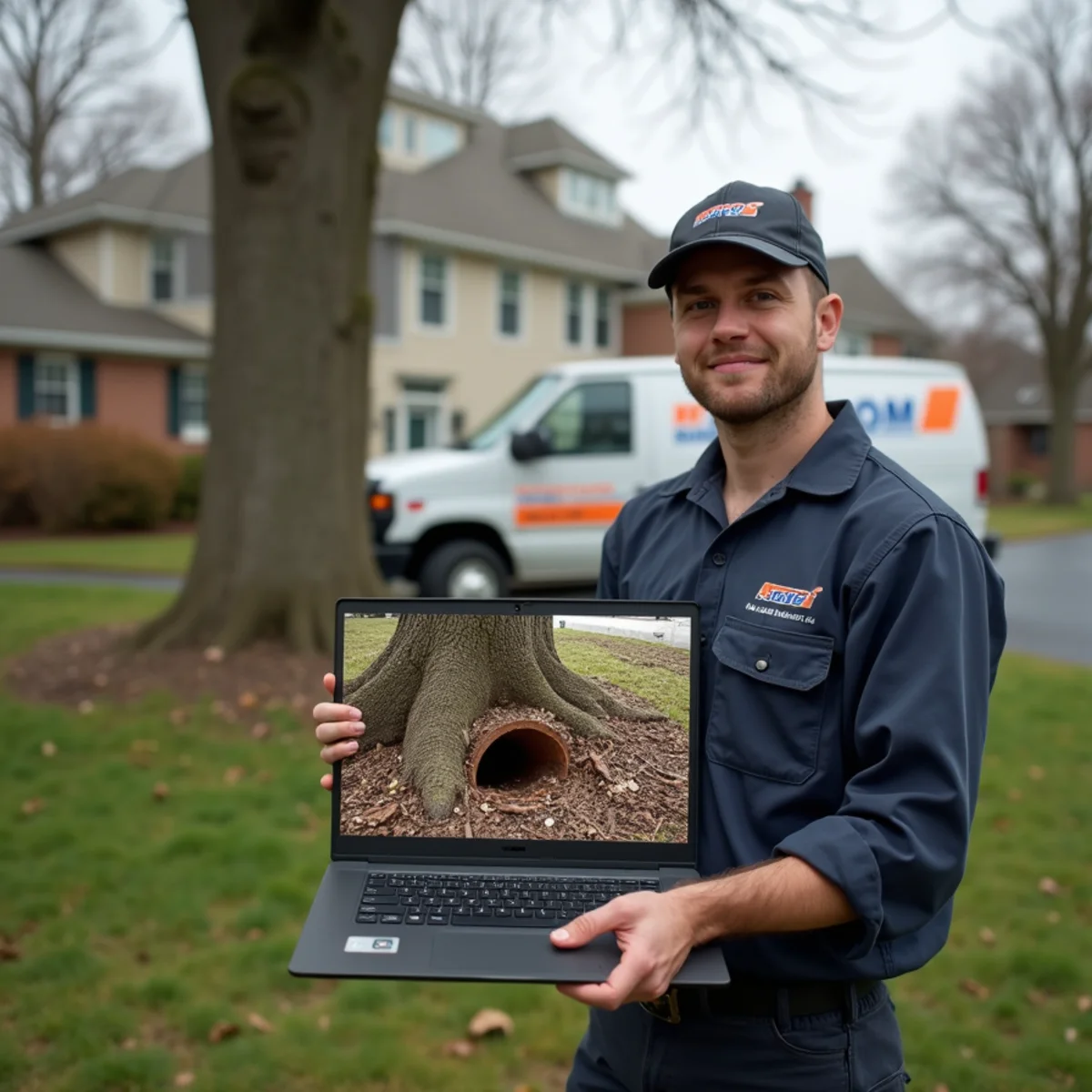
That mature oak shading your yard may be quietly wrecking your plumbing. Tree roots are relentless in their search for water and nutrients, and the small, constant leaks of moisture and vapor around sewer joints act like a beacon. In older neighborhoods across southeastern Pennsylvania, root intrusion is one of the most common and costly causes of sewer line failure. Here is how to recognize it, fix it, and prevent it.
Why Roots Invade Sewer Lines
Roots do not attack solid, sealed pipe at random. They find their way in through existing weaknesses: small cracks, loose joints, and porous older materials. Once a hair-thin root tip reaches the nutrient-rich water inside, it grows rapidly, branching into a dense mass that snags waste and eventually blocks the line. Two local factors make our region especially prone to this:
- Older clay and cast-iron sewer laterals, common in established towns, have joints every few feet that roots exploit.
- Our clay-shale soil shifts with freeze-thaw cycles, stressing pipe joints and opening the tiny gaps roots need.
Warning Signs of Root Intrusion
Root problems build gradually, giving you a chance to act before a full backup. Watch for these signs:
- Gurgling sounds from toilets and drains, especially when running water elsewhere.
- Slow drains throughout the house that clear briefly, then return.
- Recurring clogs that come back weeks after being cleared.
- Sewage odors in the yard or basement.
- Unusually lush, fast-growing patches of grass over the sewer path, fed by leaking nutrients.
- Sinkholes or soggy areas in the lawn.
If clogs keep returning no matter how many times you snake the drain, roots are a prime suspect. A camera inspection is the only way to know for sure, and it takes the guesswork out of the repair.
How Fast Do Roots Cause Damage?
Root intrusion is a slow-motion problem, which is both good news and bad news. The good news is that it rarely happens overnight, so the warning signs give you time to act. The bad news is that because the decline is gradual, many homeowners get used to living with a slightly slow drain or an occasional gurgle and put off addressing it until there is a full backup. Meanwhile the root mass keeps thickening, catching more waste and paper, and the constant moisture and root pressure widen the original crack. What started as a hairline entry point can, over a few seasons, become a fracture wide enough to let soil in and eventually cause the pipe to sag or collapse. The lesson is simple: the earlier you deal with roots, the cheaper and less invasive the fix. A recurring clog is your line asking for help.
How Root Problems Are Diagnosed
The gold standard is a sewer camera inspection. A technician feeds a waterproof camera down the line to see exactly where roots have entered, how severe the intrusion is, and whether the pipe is merely infiltrated or actually cracked and collapsing. This inspection, generally starting in the $75 to $150 range, guides which repair option makes sense so you are not paying to over-fix or under-fix the problem.
Repair Options and Costs
The right fix depends on how far the roots have progressed and the condition of the pipe:
Mechanical Root Cutting and Hydro Jetting
For early or moderate intrusion, a rotating cutter or high-pressure hydro jet clears the roots and restores flow. This is the most affordable path, often falling in the $150 to $450 range for professional drain cleaning, but it is a maintenance fix: roots will return unless the entry point is addressed.
Pipe Lining (Trenchless Repair)
If the pipe is cracked but structurally intact, a cured-in-place liner can be installed inside the existing pipe, sealing the cracks and creating a smooth, root-resistant interior without major digging. It costs more than cleaning but far less disruption than a full dig.
Sewer Line Replacement
When roots have crushed or collapsed the pipe, replacement is the only lasting fix. Depending on length, depth, and access, sewer repairs and replacement generally run from around $1,000 for a spot repair up to $5,000 or more for a full line. Our sewer line repair team will always start with a camera inspection and recommend the least invasive option that will actually solve the problem. For a full breakdown, see our guide on sewer line replacement costs in Montgomery County.
Preventing Future Root Intrusion
Once you have cleared or repaired the line, keep roots from coming back:
- 1Schedule periodic camera inspections if you have large trees near the sewer path.
- 2Have the line cleaned proactively rather than waiting for a backup.
- 3Avoid planting fast-growing, water-seeking trees near the lateral.
- 4Consider trenchless lining to seal an aging pipe before roots find new entry points.
Homeowners in tree-lined communities like Cheltenham and Wyomissing deal with this often, given the mix of mature trees and older clay sewer laterals. A proactive inspection is far cheaper than an emergency backup.
From the Field: Reading the Camera the Way a Plumber Does
A sewer camera only helps if you know what you are looking at, and that is where a homeowner watching the monitor and a technician see very different things. We are not just spotting roots; we are reading where they enter and what the pipe is doing around them. Fine feeder roots at a joint every few feet say clay lateral with open joints, a good candidate for cutting and then lining. A single fat root through a cracked belly where water is standing says the pipe has already lost its slope, and a liner will not fix a section that is sagging. We also read the camera's footage counter to mark exactly how far out the trouble sits, so if it comes to a dig, our sewer line repair crew opens the yard in one targeted spot instead of trenching the whole run. That footage mark, tied to a locator signal picked up from the surface, is what keeps a repair precise instead of exploratory.
Deal With Roots Before They Deal With You
Tree roots do not go away on their own; they grow. Catching intrusion early with a camera inspection lets you choose an affordable fix instead of an emergency replacement down the road. If you are seeing recurring clogs, gurgling drains, or sewage odors in Cheltenham, Wyomissing, King of Prussia, or anywhere in southeastern Pennsylvania, call King of Prussia Plumbing Pros at (831) 290-4327. We will inspect the line and give you honest options before roots turn into a collapse.
Frequently Asked Questions
Common signs include recurring clogs, gurgling toilets, slow drains throughout the house, sewage odors, and unusually lush patches of grass over the sewer path. A camera inspection confirms it definitively.
Often yes. Mechanical cutting or hydro jetting clears roots, and trenchless pipe lining can seal cracked pipe from the inside without a full excavation. Replacement is only needed when the pipe has collapsed.
Clearing roots with professional drain cleaning often runs $150 to $450, while sewer repairs and replacement range from about $1,000 for a spot repair to $5,000 or more for a full line, depending on damage and access.
They help as maintenance, not as a cure. Foaming root treatments and copper sulfate can kill roots inside the pipe and slow regrowth for a while, but they do nothing about the crack or open joint letting roots in. Use them to buy time between cleanings, and plan a camera inspection to address the real entry point.