Levittown's Slab Pipes Are 70 Years Old — What Owners Should Know
Levittown's post-war slab homes hide their plumbing in the concrete, and after 70 years those pipes are failing. Here is what owners need to know.
By King of Prussia Plumbing Pros · Published July 14, 2025 · Updated September 1, 2025
Levittown is a landmark of American housing history: thousands of homes built at astonishing speed in the early 1950s to house returning veterans and their families. Those homes have sheltered generations, but they share a design feature that is now becoming a liability. Most were built on concrete slabs, with the water and drain lines run directly through or beneath the slab. Seven decades later, those embedded pipes are reaching the end of their lives, and getting to them is not simple.
At King of Prussia Plumbing Pros, we work on these homes regularly, and we understand both the engineering and the emotional weight of owning a piece of history. If you own a Levittown slab home, here is what you should know about the plumbing under your feet.
Why Slab Plumbing Is Different
In a home with a basement or crawlspace, plumbing is accessible. You can see it, inspect it, and repair it without demolition. In a slab home, the supply and drain lines are cast into or run below several inches of concrete. That was efficient to build and perfectly fine for decades, but it means that when a pipe fails, the failure is happening inside your foundation, hidden from view and hard to reach.
The original pipes in these homes were typically galvanized steel for supply and cast iron or clay for drainage. All of these materials have finite lifespans, and all of them are now well past the point where failure becomes likely rather than merely possible. Galvanized steel corrodes and clogs from the inside; cast iron rusts and cracks; and our region's hard water has been accelerating the process the entire time.
The Warning Sign You Cannot Ignore: The Slab Leak
The failure homeowners fear most is the slab leak, a break in a supply line running through the concrete. Because the water is trapped under the floor, the symptoms can be subtle at first and alarming later.
- A warm or unusually damp spot on the floor, often the first sign of a hot-water slab leak.
- The sound of running water when every fixture is off.
- An unexplained jump in your water bill with no change in usage.
- Cracks appearing in floors or walls, or a musty smell as moisture wicks up into the home.
- Reduced water pressure as a corroded line finally begins to fail.
A slab leak does not stop on its own. Water under the foundation can undermine the slab, feed mold, and damage flooring long before you see a puddle. If you suspect one, the priority is finding it precisely before anyone starts breaking concrete.
Find It Before You Fix It
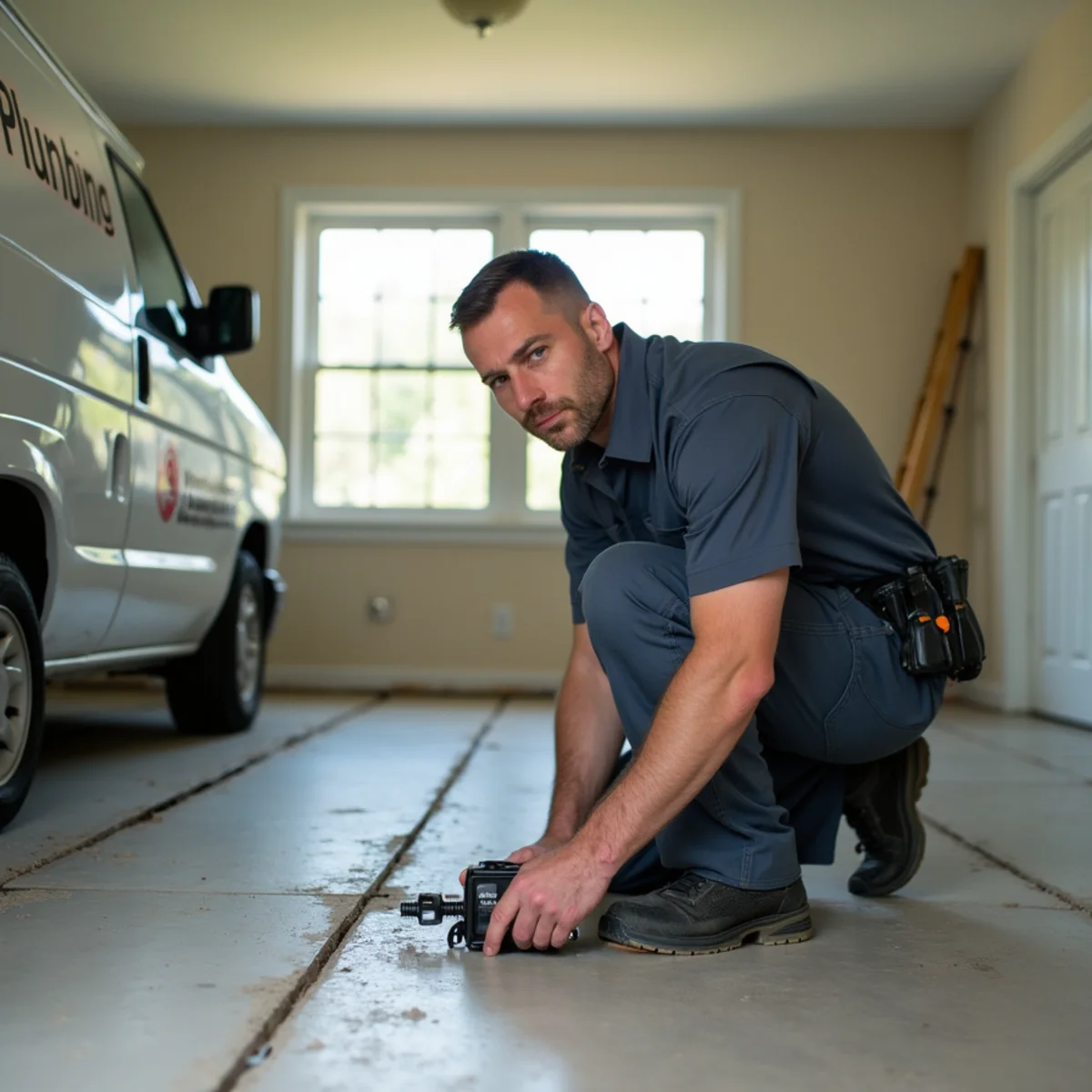
The worst way to handle a slab leak is to guess and start jackhammering. The right way is to locate it exactly first. Our leak detection team uses acoustic listening equipment, pressure testing, and thermal tools to pinpoint a leak under the slab without tearing up your floor to find it. When we do have to access the pipe, we know precisely where to go, which keeps the disruption and the cost to a minimum. In a home this age, precise detection is not a luxury; it is what separates a targeted repair from a torn-up house.
Repair or Repipe?
Once a leak is found, you face a decision. A single spot repair fixes the one break, and sometimes that is the right call, especially for an isolated failure. But in a 70-year-old system, a slab leak is often the first of several, because the whole run of pipe is the same age and in the same condition. Chasing leaks one at a time through a concrete slab gets expensive and disruptive fast.
That is why many Levittown owners ultimately choose a repiping service. Rather than repeatedly opening the slab, a repipe reroutes new PEX or copper lines through walls, ceilings, and attic space, bypassing the failing pipes in the concrete entirely. It is a bigger project up front, but it ends the cycle of slab leaks permanently and replaces original pipe that was never meant to last this long. We lay out both paths honestly so you can weigh the cost of one more patch against the peace of mind of being done with it.
Stewards of a Historic Home
Owning in Levittown means caring for a home that helped define suburban America. The plumbing was built for a different era, and part of responsible ownership now is planning for its replacement before a hidden failure forces your hand. The owners who do best are the ones who get their systems evaluated proactively rather than waiting for water to appear on the floor.
From the Field: Why We Rarely Recommend Breaking the Slab Twice
When a slab leak turns up in a 1950s Levittown home, the tempting move is to jackhammer down to the one break and patch it. We usually advise against setting up for a second slab entry later, because the pipe on either side of that break is the same seventy-year-old galvanized steel, corroded to the same degree, sitting in the same conditions. Fix one pinhole and the next often surfaces a few feet away within a year, and now you are cutting concrete, patching flooring, and living through the mess all over again.
The math homeowners miss is cumulative. Two or three separate slab repairs, each with its own concrete cutting and floor restoration, frequently cost more than an overhead repipe that abandons the buried lines entirely and never touches the slab again. We route new PEX through the attic and down interior walls, which also lifts your supply lines up out of the ground where the next leak would otherwise hide. Precise slab leak detection first tells us whether you are looking at a true one-off or the opening act of a system-wide failure.
If you own a Levittown slab home and have never had the original plumbing assessed, or you are already seeing the warning signs of a slab leak, do not wait for the concrete to tell you the hard way. Call King of Prussia Plumbing Pros at (831) 290-4327. We will locate any problems precisely, explain your real options, and help you protect a home that has stood for seventy years and can stand for many more.
Frequently Asked Questions
A slab leak is a break in a water line running through or beneath your concrete foundation. It is serious because the water is trapped under the floor, where it can undermine the slab, feed mold, and damage flooring while giving only subtle early signs. Left alone, it never stops on its own and only gets worse.
Yes. We use acoustic listening equipment, pressure testing, and thermal imaging to pinpoint a leak under the slab non-destructively. Precise detection means that if concrete does need to be opened for the repair, we know exactly where, which keeps the disruption and cost far lower than guessing.
It depends on the situation. An isolated failure can justify a spot repair, but in a 70-year-old system a slab leak is often the first of several, since the entire run of pipe is the same age. Many Levittown owners choose to reroute new lines through the walls and ceilings, which ends the cycle of slab leaks for good. We help you weigh both.
It can affect both. A supply-line leak under the slab saturates the soil beneath your foundation, which in our expansive clay can lead to uneven settling, floor cracks, and doors that no longer close square. The longer it runs, the more it undermines the support the slab was poured on. That is why locating and stopping a slab leak quickly protects the structure, not just the pipe.