Suspect a Gas Leak? A King of Prussia Safety Guide
A gas leak can be silent and deadly. Learn the warning signs every King of Prussia homeowner should know and the steps that keep your family safe.
By King of Prussia Plumbing Pros · Published January 27, 2025 · Updated September 1, 2025

Natural gas heats most homes in King of Prussia and powers water heaters, stoves, and dryers across Montgomery County. It is safe when everything works, but a leak is one of the most dangerous situations a household can face. Because gas is invisible and can build up quickly, knowing the warning signs and the right response can save lives. This guide walks you through both.
The Warning Signs of a Gas Leak
Utilities add a chemical called mercaptan to natural gas to give it a distinct smell, since the gas itself is odorless. Learn to recognize these signs:
- A rotten-egg or sulfur smell near appliances, the meter, or anywhere in the home.
- A hissing or whistling sound near a gas line, meter, or appliance connection.
- Dead or dying houseplants, or a patch of dead grass or bubbling water above an outdoor line.
- A visible white cloud, mist, or blowing dust near the gas meter or piping.
- Physical symptoms like headache, dizziness, nausea, fatigue, or difficulty breathing that improve when you leave the house.
If you smell gas strongly or hear hissing, do not investigate further. Get everyone out of the house immediately and call for help from a safe distance. Your safety comes before any inspection.
What to Do If You Suspect a Leak
The order of these steps matters. Follow them exactly:
- 1Do not use anything that could create a spark: no light switches, phones, appliances, garage doors, or vehicles inside.
- 2Do not light matches, candles, or a lighter, and do not smoke.
- 3Get everyone, including pets, out of the house right away.
- 4Leave doors open as you exit to let gas escape, but do not stop to open every window.
- 5Once outside and a safe distance away, call 911 and your gas utility's emergency line.
- 6Do not go back inside until the utility or emergency responders say it is safe.
Where Gas Leaks Commonly Start
Understanding where leaks tend to develop helps you stay alert. In homes around King of Prussia and nearby Conshohocken, leaks most often occur at:
- Aging or corroded gas line connections, especially in older homes.
- Loose fittings behind stoves, dryers, and water heaters.
- Flexible appliance connectors that have cracked or worn over time.
- Underground lines disturbed by settling clay-shale soil or nearby digging.
- Improperly installed DIY appliance hookups.
Why Gas Line Work Is Never DIY
Gas line repair and installation is strictly regulated for good reason. An improper fix can cause explosions, fires, or carbon monoxide poisoning. Pennsylvania requires licensed professionals for this work, and cutting corners here is never worth the risk. Our team provides safe, code-compliant gas line services, from leak detection and repair to new line installation, with pressure testing to confirm the system is sealed before we leave.
If you have an urgent situation outside normal hours, our 24/7 emergency plumbers coordinate the right response so your family stays protected around the clock.
Natural Gas vs. Carbon Monoxide: Know the Difference
Homeowners often confuse a natural gas leak with carbon monoxide poisoning, but they are distinct hazards and each needs its own detector. Natural gas is the fuel itself; it carries that rotten-egg odor and its main danger is fire or explosion when it builds up in an enclosed space. Carbon monoxide, by contrast, is a colorless, odorless byproduct of incomplete combustion from a malfunctioning furnace, water heater, or gas appliance. You cannot smell it at all, which is what makes it so dangerous. Its symptoms, headache, dizziness, and nausea, mirror many gas-leak symptoms, so people sometimes dismiss them. Because the two problems overlap and both can be deadly, every home with gas appliances should have both natural gas detectors near the appliances and carbon monoxide detectors on each level. If anyone in the home feels sick with no clear cause, get everyone outside into fresh air and call for help rather than trying to diagnose it yourself.
Install Detectors and Test Regularly
Because leaks can be small and slow, layered protection matters. Install natural gas detectors near gas appliances and carbon monoxide detectors on every level of your home, and test them monthly. Schedule annual inspections of gas appliances and connections, especially before winter when your furnace and water heater run hardest. A professional inspection can catch a minor leak long before it becomes an emergency. It is also wise to have any new gas appliance connected by a licensed professional rather than a handyman, and to have the whole system pressure-tested after any work that touches the gas lines. Small precautions like these are far cheaper than the alternative, and they give your family the early warning that could make all the difference.
From the Field: How a Pro Actually Pinpoints a Gas Leak
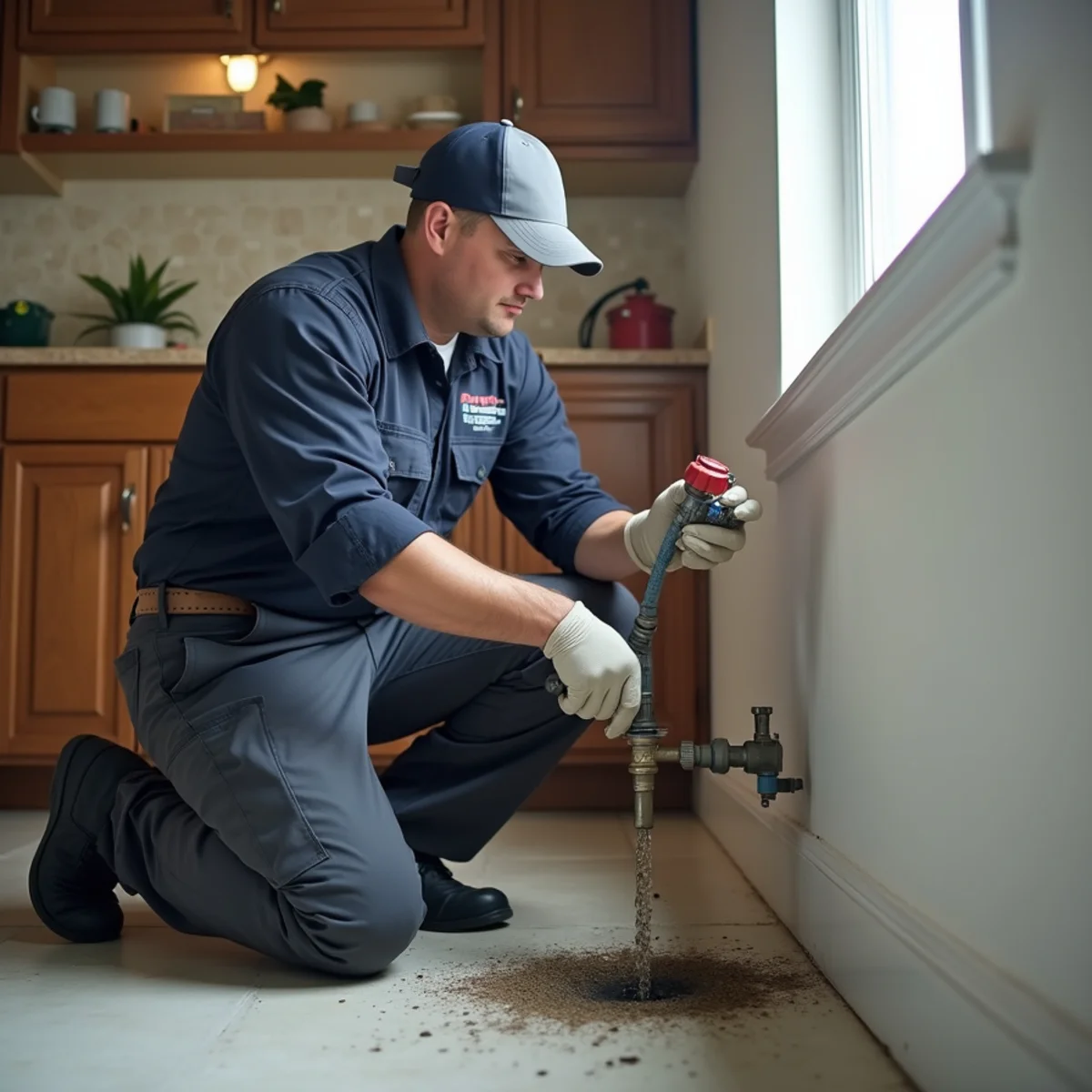
When we get a suspected-leak call, we do not guess and we do not rely on our noses alone. Once the home is confirmed safe, we isolate the system and run a pressure test: we cap the line, pressurize it, and watch a gauge for any drop over several minutes. A needle that falls tells us gas is escaping somewhere even when nothing is strong enough to smell. From there we narrow it down with an electronic combustible-gas detector and a soap solution brushed on each fitting, which bubbles at the exact leak point. The spots homeowners never think to check are the ones we find most: the flare fittings at an appliance shutoff, corroded threads where a line passes through a damp basement wall, and old flexible connectors behind a range that have work-hardened and cracked. This is code-regulated work, which is why every repair ends with a documented test before we restore gas through our licensed gas line services.
- A faint, intermittent odor still deserves a pressure test; small leaks come and go with appliance usage.
- After any work that touches the gas lines, insist on a documented pressure test before the gas is turned back on.
When in Doubt, Get Out and Call
There is no such thing as overreacting to a suspected gas leak. If you smell that rotten-egg odor, hear hissing, or feel unexplained symptoms, leave first and call from safety. Once the immediate danger is handled, call King of Prussia Plumbing Pros at (831) 290-4327 for professional gas line inspection and repair. We serve King of Prussia, Conshohocken, and all of southeastern Pennsylvania with licensed, careful work that keeps your home safe.
Frequently Asked Questions
Natural gas is odorless, so utilities add a chemical that smells like rotten eggs or sulfur. If you notice that smell near appliances or the meter, treat it as a possible leak.
Leave doors open as you exit to let gas escape, but do not waste time opening every window. Getting everyone out quickly and calling for help from outside is the priority.
No. Gas line work is regulated in Pennsylvania and must be done by a licensed professional. Improper repairs risk fire, explosion, and carbon monoxide poisoning.
Yes, after you get everyone outside and call 911. A CO alarm points to incomplete combustion from a furnace, water heater, or other gas appliance, not a raw gas leak. A licensed pro should test the appliance and its venting before you use it again, since the source is often a cracked heat exchanger or a blocked flue.