How Clay & Shale Soil Wrecks Sewer Lines in SE Pennsylvania
The clay-shale soil under Southeast Pennsylvania expands, contracts, and shifts, and buried sewer lines pay the price. Here is how the damage happens.
By King of Prussia Plumbing Pros · Published June 2, 2025 · Updated September 1, 2025
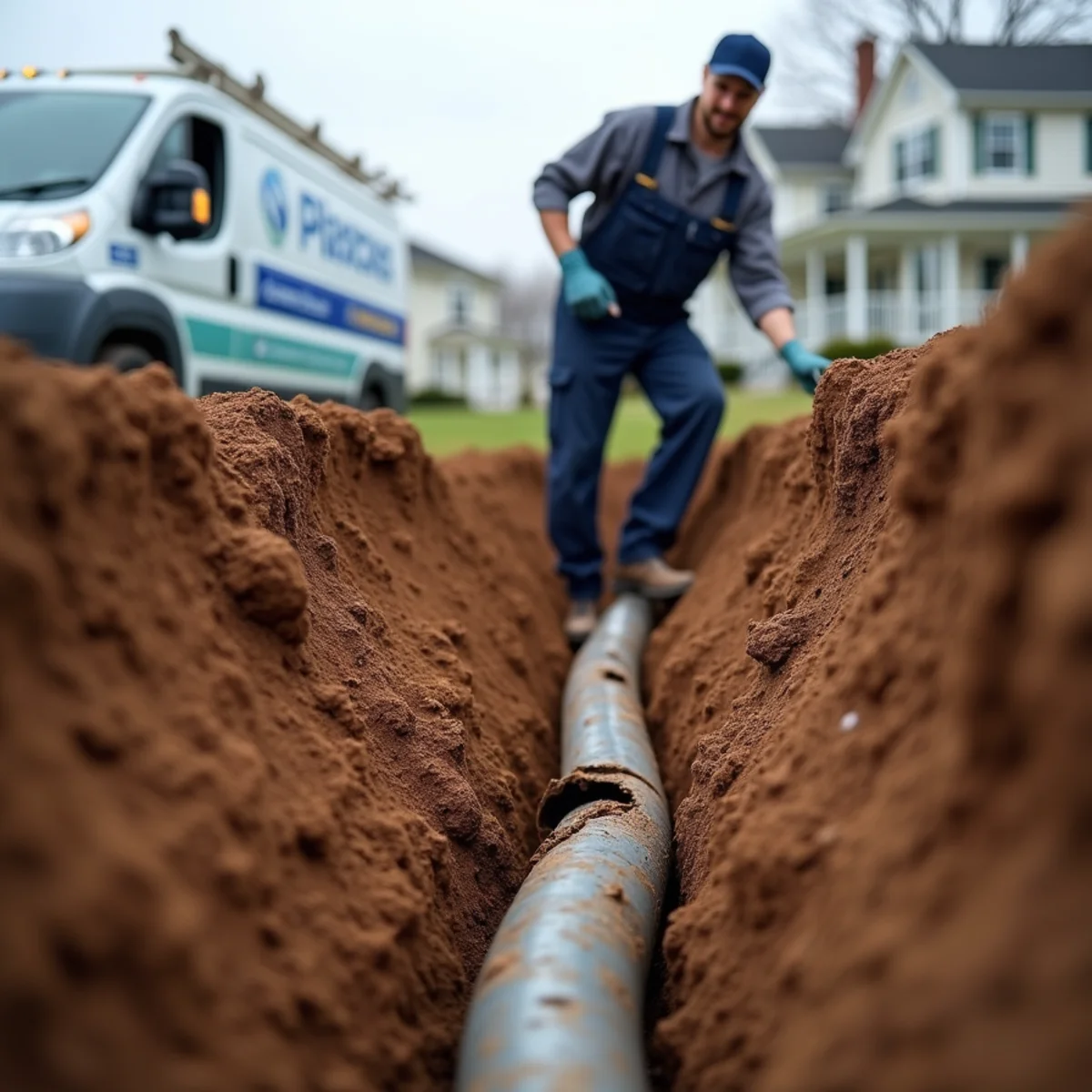
Most homeowners never think about the soil their sewer line runs through until that line fails. But here in Southeast Pennsylvania, the ground itself is one of the leading reasons sewer lines crack, sag, and separate. The clay-shale soils that dominate our region are not the inert dirt people imagine. They move, and buried pipe moves with them, often to the breaking point.
At King of Prussia Plumbing Pros, we dig up a lot of failed lines, and the soil conditions tell a consistent story. Understanding what is happening underground helps explain why sewer problems here are so common, and why the right repair depends on getting the diagnosis right.
Why Clay and Shale Are So Hard on Pipes
Clay soil is what geologists call expansive. When it soaks up water it swells, sometimes dramatically, and when it dries out it shrinks and pulls away from itself, leaving cracks and voids. Our region swings through exactly the conditions that drive this cycle: wet springs that saturate the ground, and dry late-summer stretches that bake it. Layer in the weathered shale bedrock common across Montgomery County, and you get soil that is both heavy and prone to shifting.
- Expansion and contraction put constant push-and-pull stress on rigid pipe, working joints loose over time.
- Freeze-thaw cycles in winter heave the soil upward and let it settle back, nudging pipe out of alignment.
- Settling and voids let sections of pipe lose their support and sag into a low spot, called a belly, where waste collects.
- Root-friendly cracks open at stressed joints, and tree roots chasing moisture pry them wider.
Older lines are especially vulnerable. Vitrified clay sewer pipe, standard for much of the twentieth century, was installed in short sections with joints every few feet. Every one of those joints is a place where shifting soil can create an offset or an opening. Even the transition to modern materials did not erase the problem, because the ground keeps moving no matter what the pipe is made of.
The Warning Signs
Soil-driven sewer damage usually announces itself gradually. Catching it early is the difference between a targeted repair and a yard-wide excavation.
- 1Slow drains throughout the house, not just at one fixture, or drains that back up repeatedly despite cleaning.
- 2Gurgling toilets or drains, a sign air is moving through a partially blocked or bellied line.
- 3Patches of unusually lush, green grass or soggy ground over the sewer route, where escaping wastewater feeds the lawn.
- 4Sewage odors in the yard or basement, or the appearance of a sinkhole or depression along the line.
Recurring backups that come back within weeks of a cleaning are the classic signature of a structural problem, not a simple clog. If snaking the line only buys you a few weeks of relief, the pipe itself is failing and needs to be inspected, not just cleared again.
Diagnosis Before Digging
We never recommend excavation on a hunch. A camera inspection sent down the line shows exactly what the soil has done: where the pipe has cracked, where a joint has offset, where a belly has formed, and whether roots have found their way in. That footage lets us pinpoint the failure and match the repair to the actual condition of your sewer line rather than guessing and over-digging.
Depending on what the camera shows, the fix might be a spot repair on a single cracked section, a trenchless lining that rehabilitates the pipe from the inside with minimal digging, or a full replacement where the line has failed along its length. Trenchless methods are often ideal in our area because they avoid tearing up mature landscaping and driveways, though the shifting soil that caused the damage sometimes dictates a traditional dig. We walk you through the trade-offs honestly.
A Regional Problem
This is not a niche issue; it is a defining feature of plumbing across the region. Throughout Montgomery County, the combination of expansive clay, weathered shale, and aging clay sewer pipe produces a steady stream of soil-related failures. In communities like Springfield, older established neighborhoods with mature trees see the double threat of shifting ground and aggressive roots working on the same vulnerable joints.
Protecting Your Line
You cannot change the soil, but you can stay ahead of it. Have your sewer line camera-inspected if your home is more than a few decades old and has never been checked, especially before you buy. Address slow drains and repeat backups promptly instead of masking them with repeated snaking. And keep large trees a sensible distance from the sewer route where you have the choice.
From the Field: Why Bedding and Backfill Decide How Long a Repair Lasts
The part of a sewer repair nobody sees is the part that determines its lifespan: how the new pipe is bedded and backfilled. In our expansive clay, dropping fresh pipe onto a rocky, uneven trench bottom guarantees point-loading, and the next wet-dry cycle cracks it exactly where a stone digs in. We over-excavate, then set the pipe on a proper gravel bed that lets it flex with the soil and drains water away from the line instead of trapping it against the joints. That single step separates a repair that lasts decades from one that fails in a few seasons.
We also check and correct slope with a level, not by eye. Too little fall and waste sits and settles; too much and the liquid outruns the solids and leaves them behind, both of which invite the next belly. On trenchless jobs we still verify the host pipe can support a liner, because a fully collapsed clay line in shifting ground sometimes has to be dug and re-bedded no matter how tempting the no-dig option looks. Our sewer line repair crews document the bedding so you know the fix was built to ride out the ground, not just patch it.
Southeast Pennsylvania's ground will keep shifting long after any repair, so the goal is a properly bedded, well-matched pipe that can ride out the movement. If your drains are slow, your yard smells, or backups keep returning, call King of Prussia Plumbing Pros at (831) 290-4327. We will inspect the line, show you what the soil has done, and recommend the least invasive fix that actually solves the problem.
Frequently Asked Questions
Absolutely. Expansive clay swells when wet and shrinks when dry, and freeze-thaw cycles heave the ground up and down. That constant movement stresses rigid pipe and its joints until they crack, offset, or sag into a belly. It is one of the most common causes of sewer failure in our region.
The timing gives it away. A one-time clog clears and stays clear after cleaning. Structural damage from soil movement produces backups that return within days or weeks of every cleaning, often with gurgling drains, soggy spots in the yard, or sewage odors. A camera inspection confirms which one you have.
Often, yes. Trenchless lining rehabilitates the pipe from the inside and spares your landscaping and driveway, which is a big advantage in established neighborhoods. That said, a severely collapsed line or one riding through very unstable ground sometimes requires traditional excavation. We use the camera findings to recommend the right method for your specific line.
Most residential laterals in our area run roughly four to six feet down, deep enough to sit within the soil layer that swells and shrinks the most with moisture and frost. That places the pipe squarely in the zone where clay movement and freeze-thaw do their damage. Shallower older lines are even more exposed, which is why aging clay pipe in this soil fails so predictably.